RAMAN fiber links are widely used in the telecommunications industry to transmit information over long distances. They are known for their high capacity, low attenuation, and ability to transmit signals over hundreds of kilometers. However, like any other technology, RAMAN fiber links can experience issues that require troubleshooting. In this article, we will discuss the common problems encountered in RAMAN fiber links and how to troubleshoot them effectively.
Understanding RAMAN Fiber Links
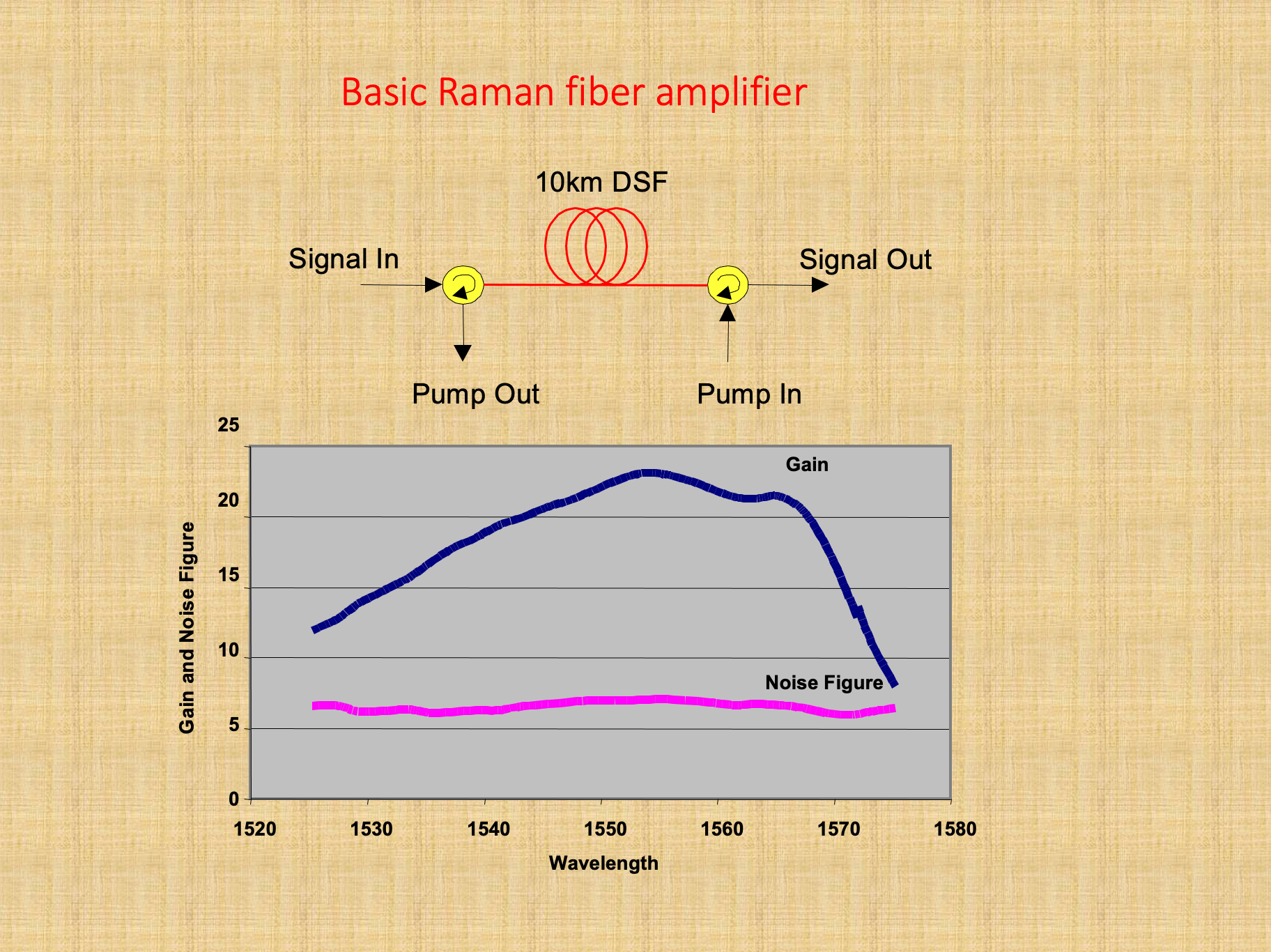
Before we delve into troubleshooting, let’s first understand what RAMAN fiber links are. A RAMAN fiber link is a type of optical fiber that uses a phenomenon called Raman scattering to amplify light signals. When a light signal is transmitted through the fiber, some of the photons interact with the atoms in the fiber, causing them to vibrate. This vibration results in the creation of new photons, which have the same wavelength as the original signal but are out of phase with it. This process amplifies the original signal, allowing it to travel further without losing strength.
Common Issues with RAMAN Fiber Links
RAMAN fiber links can experience various issues that affect their performance. These issues include:
Loss of Signal
A loss of signal occurs when the light signal transmitted through the fiber is too weak to be detected by the receiver. This can be caused by attenuation or absorption of the signal along the fiber, or by poor coupling between the fiber and the optical components.
Signal Distortion
Signal distortion occurs when the signal is altered as it travels through the fiber. This can be caused by dispersion, which is the spreading of the signal over time, or by nonlinear effects, such as self-phase modulation and cross-phase modulation.
Signal Reflection
Signal reflection occurs when some of the signal is reflected back towards the source, causing interference with the original signal. This can be caused by poor connections or mismatches between components in the fiber link.
Troubleshooting RAMAN Fiber Links
Now that we have identified the common issues with RAMAN fiber links, let’s look at how to troubleshoot them effectively.
Loss of Signal
To troubleshoot a loss of signal, first, check the power levels at the transmitter and receiver ends of the fiber link. If the power levels are too low, increase them by adjusting the output power of the transmitter or by adding amplifiers to the fiber link. If the power levels are too high, reduce them by adjusting the output power of the transmitter or by attenuating the signal with a fiber attenuator.
If the power levels are within the acceptable range but the signal is still weak, check for attenuation or absorption along the fiber link. Use an optical time-domain reflectometer (OTDR) to measure the attenuation along the fiber link. If there is a high level of attenuation at a particular point, check for breaks or bends in the fiber or for splices that may be causing the attenuation.
Signal Distortion
To troubleshoot signal distortion, first, check for dispersion along the fiber link. Dispersion can be compensated for using dispersion compensation modules, which can be inserted into the fiber link at specific points.
If the signal distortion is caused by nonlinear effects, such as self-phase modulation or cross-phase modulation, use a spectrum analyzer to measure the spectral components of the signal. If the spectral components are broadened, this indicates the presence of nonlinear effects. To reduce nonlinear effects, reduce the power levels at the transmitter or use dispersion-shifted fiber, which is designed to minimize nonlinear effects.
Signal Reflection
To troubleshoot signal reflection, first, check for mismatches or poor connections between components in the fiber link. Ensure that connectors are properly aligned and that there are no gaps between the components. Use a visual fault locator (VFL) to identify any gaps or
scratches on the connector surface that may be causing reflection. Replace or adjust any components that are causing reflection to reduce interference with the signal.
Conclusion
Troubleshooting RAMAN fiber links can be challenging, but by understanding the common issues and following the appropriate steps, you can effectively identify and resolve any problems that arise. Remember to check power levels, attenuation, dispersion, nonlinear effects, and reflection when troubleshooting RAMAN fiber links.
FAQs
- What is a RAMAN fiber link?
A RAMAN fiber link is a type of optical fiber that uses Raman scattering to amplify light signals. - What causes a loss of signal in RAMAN fiber links?
A loss of signal can be caused by attenuation or absorption along the fiber or by poor coupling between components in the fiber link. - How can I troubleshoot signal distortion in RAMAN fiber links?
Signal distortion can be caused by dispersion or nonlinear effects. Use dispersion compensation modules to compensate for dispersion, and reduce power levels or use dispersion-shifted fiber to minimize nonlinear effects. - How can I troubleshoot signal reflection in RAMAN fiber links?
Signal reflection can be caused by poor connections or mismatches between components in the fiber link. Use a VFL to identify any gaps or scratches on the connector surface that may be causing reflection, and replace or adjust any components that are causing interference with the signal. - What is an OTDR?
An OTDR is an optical time-domain reflectometer used to measure the attenuation along a fiber link. - Can RAMAN fiber links transmit signals over long distances?
Yes, RAMAN fiber links are known for their ability to transmit signals over hundreds of kilometers. - How do I know if my RAMAN fiber link is experiencing signal distortion?
Signal distortion can cause the signal to be altered as it travels through the fiber. This can be identified by using a spectrum analyzer to measure the spectral components of the signal. If the spectral components are broadened, this indicates the presence of nonlinear effects. - What is the best way to reduce signal reflection in a RAMAN fiber link?
The best way to reduce signal reflection is to ensure that connectors are properly aligned and that there are no gaps between components. Use a VFL to identify any gaps or scratches on the connector surface that may be causing reflection, and replace or adjust any components that are causing interference with the signal. - How can I improve the performance of my RAMAN fiber link?
You can improve the performance of your RAMAN fiber link by regularly checking power levels, attenuation, dispersion, nonlinear effects, and reflection. Use appropriate troubleshooting techniques to identify and resolve any issues that arise. - What are the advantages of using RAMAN fiber links?
RAMAN fiber links have several advantages, including high capacity, low attenuation, and the ability to transmit signals over long distances without losing strength. They are widely used in the telecommunications industry to transmit information over large distances.

Optical Communications & Network Automation Expert | Author of 3 Books for Optical Engineers | Founder, MapYourTech
Optical networking engineer with nearly two decades of experience across DWDM, OTN, coherent optics, submarine systems, and cloud infrastructure. Founder of MapYourTech. Read full bio →
Follow on LinkedIn