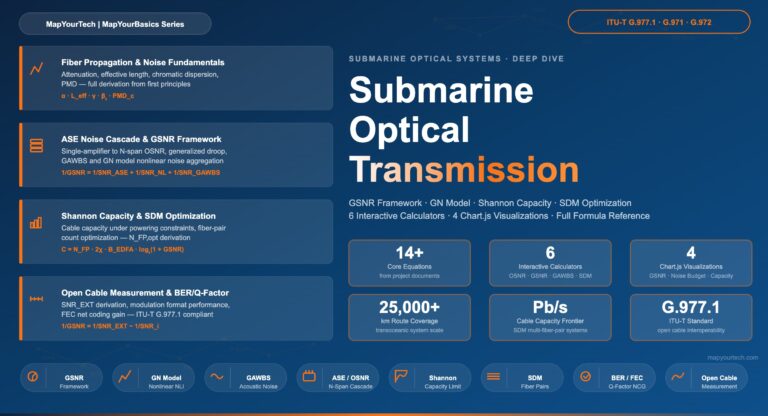
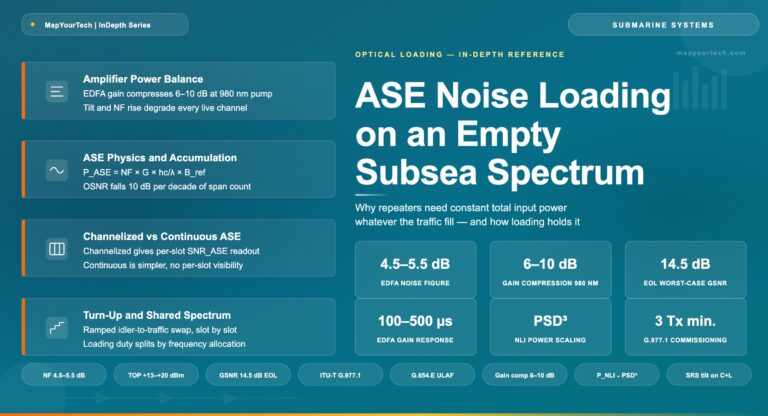
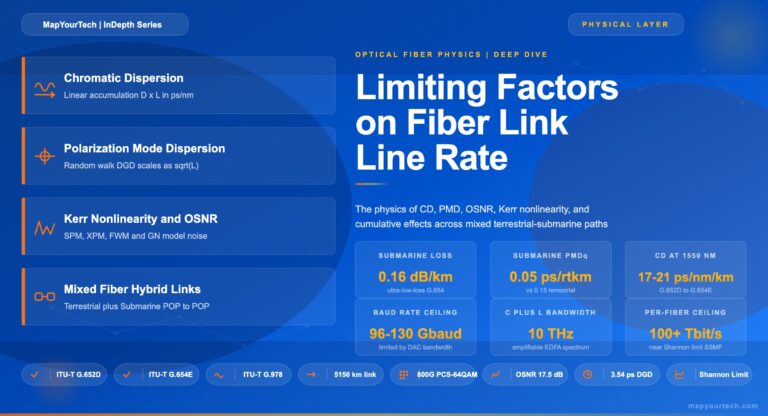
In the world of global communication, Submarine Optical Fiber Networks cable play a pivotal role in facilitating the exchange of data across continents. As technology continues to evolve, the capacity and capabilities of these cables have been expanding at an astonishing pace. In this article, we delve into the intricate details of how future cables are set to scale their cross-sectional capacity, the factors influencing their design, and the innovative solutions being developed to overcome the challenges posed by increasing demands.

Scaling Factors: WDM Channels, Modes, Cores, and Fibers
In the quest for higher data transfer rates, the architecture of future undersea cables is set to undergo a transformation. The scaling of cross-sectional capacity hinges on several key factors: the number of Wavelength Division Multiplexing (WDM) channels in a mode, the number of modes in a core, the number of cores in a fiber, and the number of fibers in the cable. By optimizing these parameters, cable operators are poised to unlock unprecedented data transmission capabilities.
Current Deployment and Challenges
Presently, undersea cables commonly consist of four to eight fiber pairs. On land, terrestrial cables have ventured into new territory with remarkably high fiber counts, often based on loose tube structures. A remarkable example of this is the deployment of a 1728-fiber cable across Sydney Harbor, Australia. However, the capacity of undersea cables is not solely determined by fiber count; other factors come into play.
Power Constraints and Spatial Limitations
The maximum number of fibers that can be incorporated into an undersea cable is heavily influenced by two critical factors: electrical power availability and physical space constraints. The optical amplifiers, which are essential for boosting signal strength along the cable, require a certain amount of electrical power. This power requirement is dependent on various parameters, including the overall cable length, amplifier spacing, and the number of amplifiers within each repeater. As cable lengths increase, power considerations become increasingly significant.
Efficiency: Improving Amplifiers for Enhanced Utilisation
Optimising the efficiency of optical amplifiers emerges as a strategic solution to mitigate power constraints. By meticulously adjusting design parameters such as narrowing the optical bandwidth, the loss caused by gain flattening filters can be minimised. This reduction in loss subsequently decreases the necessary pump power for signal amplification. This approach not only addresses power limitations but also maximizes the effective utilisation of resources, potentially allowing for an increased number of fiber pairs within a cable.
Multi-Core Fiber: Opening New Horizons
The concept of multi-core fiber introduces a transformative potential for submarine optical networks. By integrating multiple light-guiding cores within a single physical fiber, the capacity for data transmission can be substantially amplified. While progress has been achieved in the fabrication of multi-core fibers, the development of multi-core optical amplifiers remains a challenge. Nevertheless, promising experiments showcasing successful transmissions over extended distances using multi-core fibers with multiple wavelengths hint at the technology’s promising future.
Technological Solutions: Overcoming Space Constraints
As fiber cores increase in number, so does the need for amplifiers within repeater units. This poses a challenge in terms of available physical space. To combat this, researchers are actively exploring two key technological solutions. The first involves optimising the packaging density of optical components, effectively cramming more functionality into the same space. The second avenue involves the use of photonic integrated circuits (PICs), which enable the integration of multiple functions onto a single chip. Despite their potential, PICs do face hurdles in terms of coupling loss and power handling capabilities.
Navigating the Future
The realm of undersea fiber optic cables is undergoing a remarkable evolution, driven by the insatiable demand for data transfer capacity. As we explore the scaling factors of WDM channels, modes, cores, and fibers, it becomes evident that power availability and physical space are crucial constraints. However, ingenious solutions, such as amplifier efficiency improvements and multi-core fiber integration, hold promise for expanding capacity. The development of advanced technologies like photonic integrated circuits underscores the relentless pursuit of higher data transmission capabilities. As we navigate the intricate landscape of undersea cable design, it’s clear that the future of global communication is poised to be faster, more efficient, and more interconnected than ever before.
Reference and Credits
https://www.sciencedirect.com/book/9780128042694/undersea-fiber-communication-systems
https://infoworldmaps.com/3d-submarine-cable-map/
https://gfycat.com/aptmediocreblackpanther